
Home Inspection 101
Knowing the condition of a home can save money and unwanted surprises.
Buying a house is one of, if not the biggest investment a lot of people make in their lives. Before making that purchase, a thorough inspection is key. Home inspectors evaluate the structure, roof, plumbing, electrical, HVAC, insulation, and potential hazards like mold, radon, lead, or asbestos.
Why it matters:
If buyers know about issues before closing, they and their representatives can negotiate repairs.
For sellers, finding problems ahead of listing can allow them to be repaired and present a better listing to potential buyers. Neither sellers or buyers want unpleasant surprises that can be discovered during inspection.
For everyone involved, a quality inspection can give peace of mind and investment protection.
Quick Home Inspection Facts
NAR recommends inspections be done by a member of the American Society of Home Inspectors (ASHI) or the International Association of Certified Home Inspectors (InterNACHI) as they’re both credible resources.
Inspections tend to last around 2–3 hours.
Some of the most common findings include foundation, electrical, plumbing, HVAC, and safety hazard repairs that are recommended or required.
“As-Is” homes may skip repairs—consult your agent.
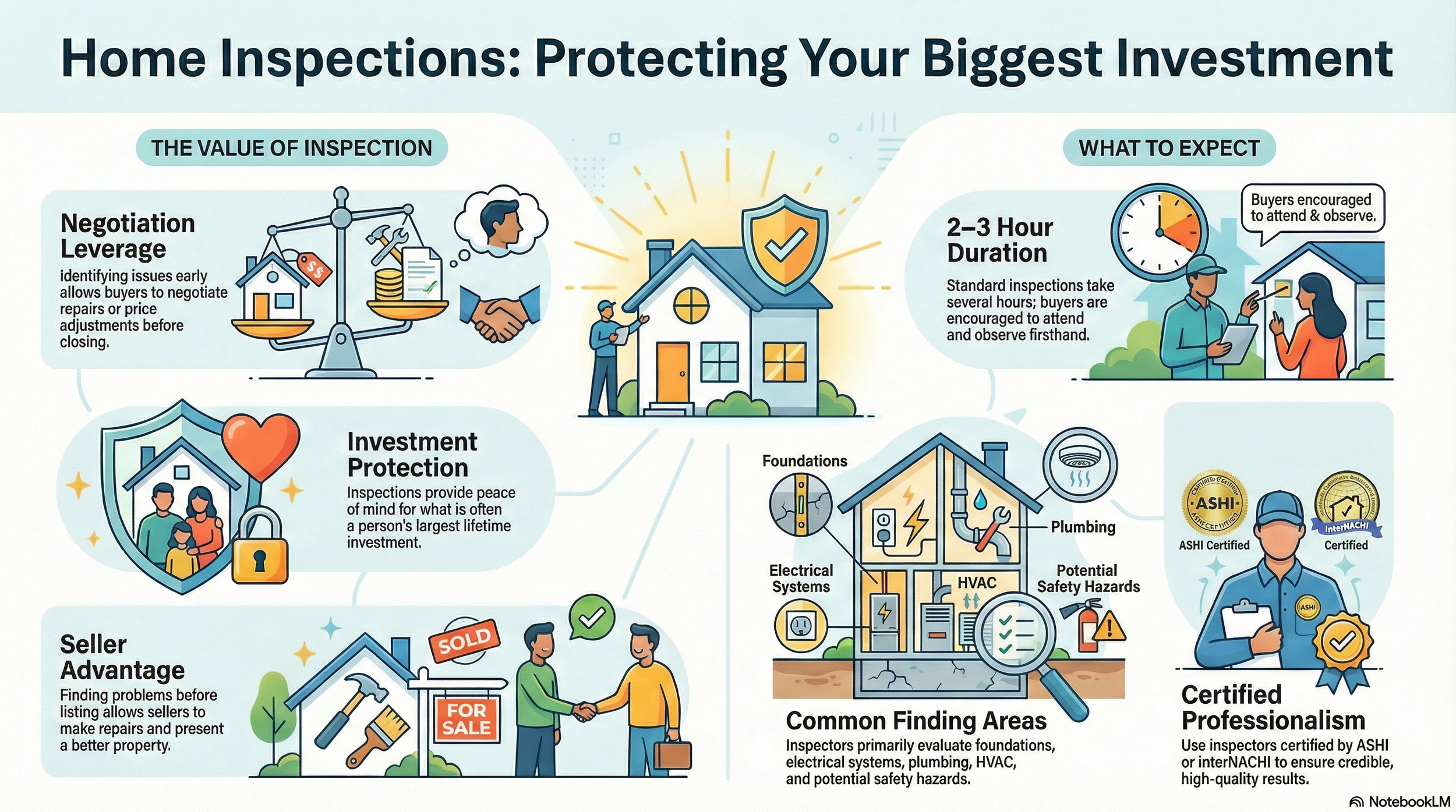
Buyers can attend inspections and it’s probably a good idea that they do. They’ll not only be able to see and hear about any issues firsthand, but can also make sure the inspectors goes over every part of the house. Not all inspectors conduct their business exactly the same. Some use the naked eye, other’s incorporate fancy tools to see what’s going on with a structure. Some might say a new build doesn’t need an inspection because everything’s new. But sometimes an inspection can find issues that were missed by a builder or contractor.
A smart inspection helps you make informed decisions and ensures confidence in your real estate transaction. Work with a realtor to find a trusted inspector and review your options. Contact us for more information.
Written by: Amy Winder, Makenna Lewison
Sources: NAR